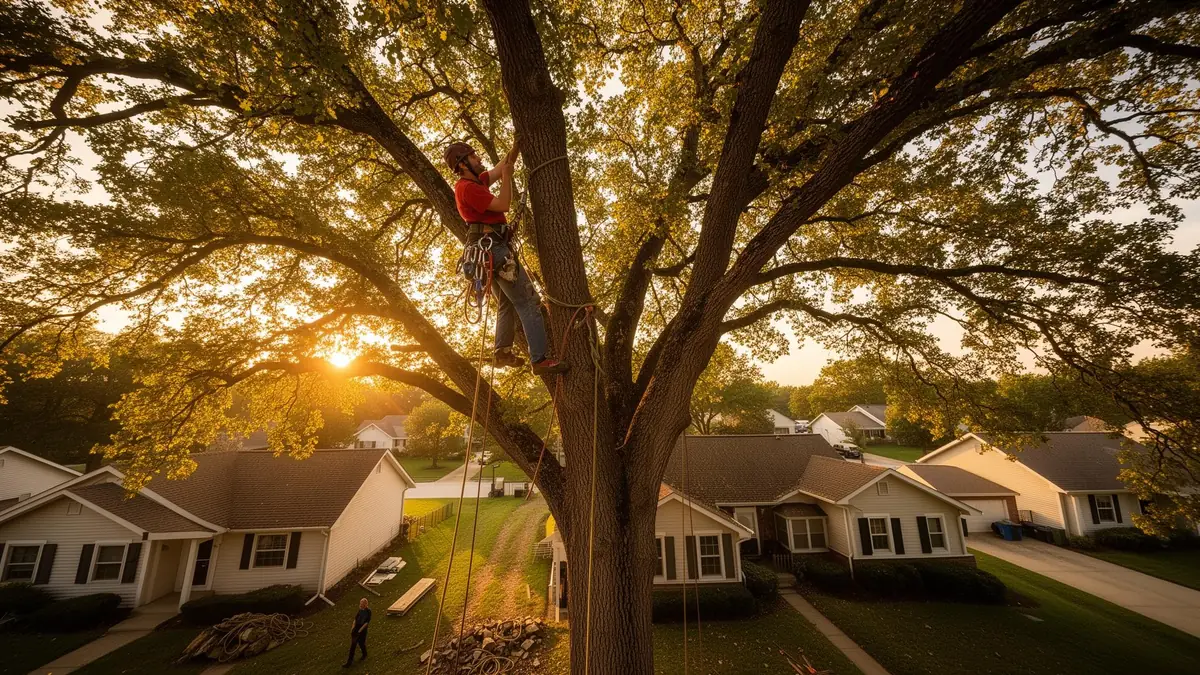
Most tree removals in West Michigan run between $500 and $2,500. A small ornamental tree might cost a few hundred dollars. A large oak hanging over your roof that needs a crane can run $3,000 or more. Every tree is different — but the price isn't random. Here is what actually drives the number.
What drives the cost
- Size. A 25-foot crabapple and an 80-foot silver maple are different jobs. Height and trunk diameter matter most.
- Location and access. A tree in an open front yard is straightforward. A tree squeezed between your house and your neighbor's fence takes rigging, time, and skill.
- Condition. Dead and dying trees are more dangerous to climb and more unpredictable when they come down. Dead ash trees — and West Michigan has a lot of them thanks to the emerald ash borer — often cost more to remove than healthy trees the same size, because they can't be safely climbed.
- Whether a crane is needed. Crane removal costs more per hour but is often cheaper overall — it's faster, safer, and avoids damage to your yard.
- Cleanup and the stump. Hauling wood, chipping brush, and grinding the stump are usually line items. Ask what's included in any bid.
Typical ranges
| Small tree (under 30 ft) | $300–$700 |
| Medium tree (30–60 ft) | $700–$1,500 |
| Large tree (60 ft+) | $1,500–$3,500 |
| Hazardous/crane removal | $2,500 and up |
| Stump grinding (add-on) | $100–$400 |
These are typical West Michigan ranges, not quotes. The only real number is a free on-site estimate.
Why the cheapest bid can cost you the most
A tree company without insurance is cheap for a reason. If an uninsured crew drops a limb through your roof, that's your homeowner's policy — and your problem. Ask for proof of liability insurance and workers' comp before anyone touches your tree. We're fully insured and BBB A+ rated, and we'll show you the paperwork without being asked twice.
Can't fit it in the budget right now?
A dangerous tree doesn't wait for a good month. We offer financing through Hearth, so you can split the cost into monthly payments instead of putting off a removal that gets more expensive — and more dangerous — every season.