Tree Trimming and Pruning Services in Hudsonville & West Michigan
Expert pruning for healthier, safer, more beautiful trees — on every property we touch.
Healthy, well-maintained trees don't just look great — they protect your property, increase your home's value, and keep your family safe. My Tree Guy LLC provides professional tree trimming and pruning services throughout Hudsonville, Grand Rapids, and over 25 communities across Ottawa County, Kent County, and the greater West Michigan area.
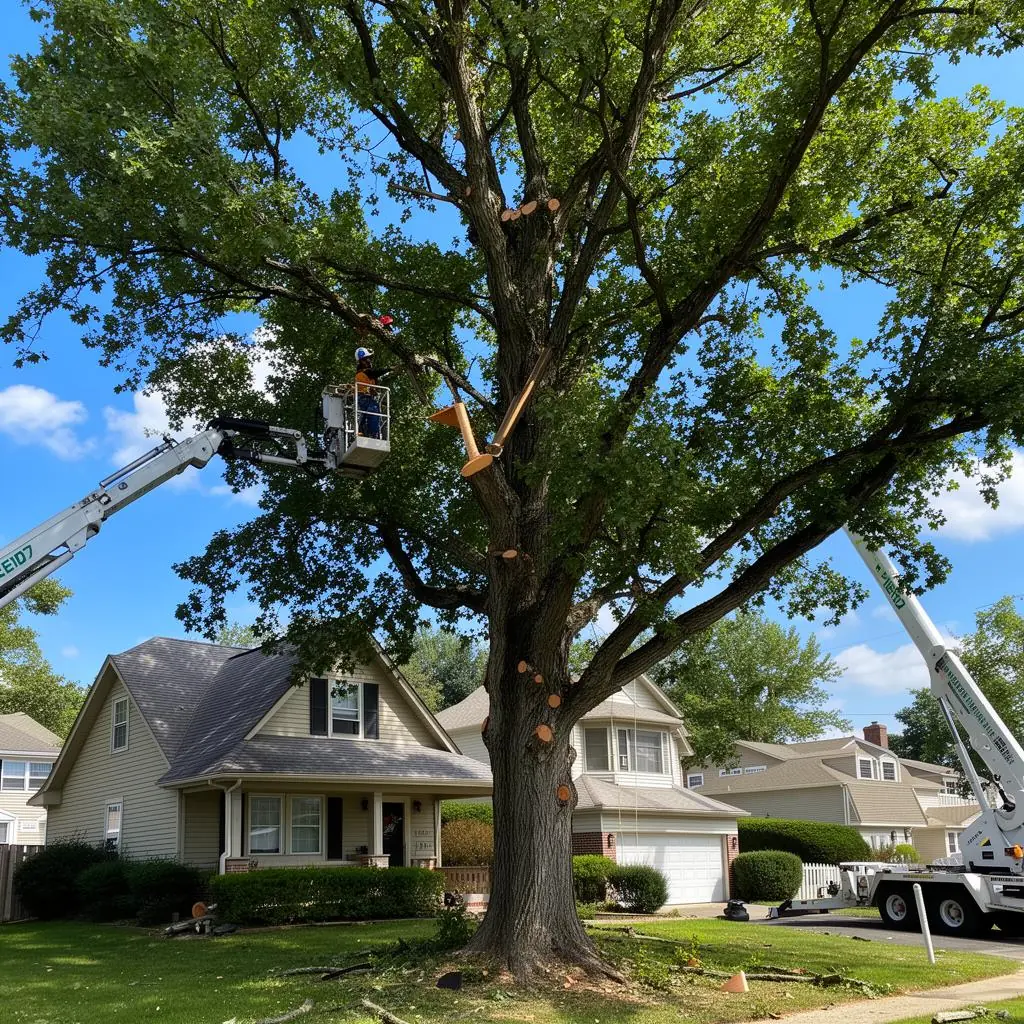
Whether you have a towering red oak that needs crown thinning, silver maples with branches scraping your roof, fruit trees that haven't been pruned in years, or a row of spruce trees that need shaping, our experienced crew handles it all. We serve homeowners and businesses in Byron Center, Jenison, Grandville, Zeeland, Allendale, Wyoming, Kentwood, Walker, Ada, Rockford, and surrounding communities.
As a family owned and operated business based right here in Hudsonville, we take pride in doing the job right. That means following ISA (International Society of Arboriculture) pruning standards on every tree, every time. We never top trees, never lion-tail, and never make improper cuts that harm the tree's health. Our goal is to improve your tree's structure, safety, and appearance while preserving its long-term vitality.
We're fully licensed, carry comprehensive general liability and workers' compensation insurance, and maintain a BBB A+ rating. We also offer flexible financing options through Hearth for larger trimming projects.
Why Choose My Tree Guy
Why Regular Tree Trimming Matters in West Michigan
West Michigan's climate, weather patterns, and tree species create unique challenges that make regular professional trimming essential — not optional.
Michigan's Harsh Winters
Heavy ice and wet snow loads are a reality every winter in West Michigan. Properly pruned trees with balanced canopies and strong branch attachments are far less likely to suffer catastrophic limb failure during ice storms. Trees with excessive deadwood, crossing branches, or codominant stems are ticking time bombs when January ice hits.
West Michigan Thunderstorms
Spring and summer thunderstorms regularly produce 60+ mph winds across the Grand Rapids metro area. Overgrown trees with dense, unthinned canopies act like sails — catching wind and increasing the load on branches and root systems. Regular crown thinning reduces wind resistance and dramatically lowers the risk of storm damage.
Emerald Ash Borer Impact
The Emerald Ash Borer has killed millions of ash trees across Michigan since 2002. Ash trees in various stages of decline are common throughout Hudsonville, Jenison, Grandville, and Grand Rapids neighborhoods. These trees require careful assessment before any pruning — a weakened ash may need removal rather than trimming, and dead ash wood is extremely brittle and dangerous to work in.
Fast-Growing Species Need Attention
Silver maples and cottonwoods — two of the most common trees in Grand Rapids suburbs and older West Michigan neighborhoods — grow rapidly and develop weak, narrow-angle branch unions without regular structural pruning. These tight V-shaped unions are prone to splitting, especially under wind and ice loads. Regular trimming corrects these structural defects before they become failures.
Clearance From Structures & Lines
Older neighborhoods in Hudsonville, Jenison, Byron Center, and Grandville are filled with mature trees planted decades ago that have grown into rooflines, gutters, siding, and power lines. Branches rubbing on your roof cause shingle damage and moisture issues. Limbs near power lines create fire risk and outage potential. Regular trimming maintains safe clearance and protects your home.
Types of Tree Trimming We Offer
Different trees need different approaches. We offer a full range of pruning services tailored to your tree's species, age, condition, and your goals.
Crown Thinning
Selectively removing interior branches to reduce canopy density, improve light penetration, and decrease wind resistance. This is the most common type of trimming for mature shade trees in residential settings.
Crown Raising
Removing lower branches to increase clearance over sidewalks, driveways, rooflines, and lawns. Essential for maintaining safe pedestrian and vehicle passage and improving visibility on your property.
Deadwood Removal
Removing dead, dying, and broken branches from the canopy. Dead branches (also called widow-makers) can fall without warning and are a serious safety hazard, especially in yards where children play.
Crown Reduction
Reducing the overall size of the canopy by making proper reduction cuts back to lateral branches. Unlike topping, crown reduction maintains the tree's natural form while reducing its height and spread.
Vista Pruning
Strategically thinning or removing branches to create or restore a view — of a lake, field, or landscape feature — without compromising the tree's health or removing the entire tree.
Structural Pruning
Training young and developing trees to establish strong branch architecture, proper spacing, and a dominant central leader. This preventative work significantly reduces the risk of future failures.
Hazard Limb Removal
Emergency or urgent removal of specific branches that pose an immediate risk — hanging broken limbs, branches touching structures or power lines, or limbs damaged by storms.
Ornamental & Fruit Tree Pruning
Specialized pruning for apple, cherry, pear, crabapple, and ornamental trees to maintain shape, improve fruit production, manage size, and enhance flowering. Requires species-specific knowledge and timing.
Our Tree Trimming Process
From assessment to cleanup, we make tree trimming straightforward, professional, and stress-free.
Free On-Site Assessment
We visit your property, evaluate each tree's species, health, structure, and surroundings, and discuss your goals — whether that's improving safety, enhancing appearance, restoring a view, or preparing for construction. No cost, no obligation.
Custom Trimming Plan
Based on our assessment, we develop a trimming plan for each tree specifying the type of pruning needed, the scope of work, and the cost. We explain our recommendations in plain language so you understand exactly what we're doing and why.
Professional Execution
Our crew performs all pruning following ISA (International Society of Arboriculture) standards. We make proper cuts at the branch collar, never top trees, never lion-tail, and never remove more than 25% of the live canopy in a single session. Every cut has a purpose.
Complete Cleanup
All branches, brush, and debris are chipped on-site or hauled away. Your lawn is raked and blown clean. Your property looks better than when we arrived — that's our standard on every single job.
Trees We Commonly Trim in West Michigan
Each species has unique growth patterns, pruning requirements, and seasonal considerations. We know them all.
Oak Trees
Red and white oaks are prized West Michigan hardwoods. Best pruned in winter to prevent oak wilt transmission. Our crew follows strict seasonal guidelines and sanitizes equipment between cuts on oak species.
Maple Trees
Sugar maples, red maples, and especially silver maples are everywhere in West Michigan. Silver maples in particular require frequent attention due to their fast growth and weak branch attachments that develop without proper structural pruning.
Ash Trees (EAB Assessment)
Before pruning any ash tree, we assess its condition relative to Emerald Ash Borer infestation. Healthy, treated ash trees can be pruned normally. Ash trees with significant canopy dieback or bark loss may need removal — we'll give you an honest assessment.
Pine & Spruce
White pines, red pines, and spruce trees are common throughout West Michigan properties. These evergreens benefit from deadwood removal, lower limb clearance, and candle pruning to manage density and shape.
Fruit Trees
Apple, cherry, and pear trees thrive in West Michigan's climate (we're in the heart of Michigan's fruit belt). Annual dormant-season pruning is essential for fruit production, disease prevention, and maintaining a manageable size for picking.
Ornamental Trees
Crabapples, dogwoods, Japanese maples, redbuds, and other ornamentals add beauty to West Michigan landscapes. These smaller trees benefit from careful shaping, thinning, and deadwood removal to maintain their aesthetic appeal.
Tree Trimming for Homes & Businesses
Residential tree trimming keeps your property safe, beautiful, and well-maintained. Whether you need branches cleared from your roof, a better view from your deck, deadwood removed before storm season, or fruit trees shaped for a better harvest, we tailor our approach to your specific trees and goals. Most residential trimming jobs are completed in half a day or less.
Commercial and HOA tree trimming requires a different approach — managing dozens or hundreds of trees across parking lots, common areas, building perimeters, and streetscapes. We offer annual and semi-annual maintenance contracts that keep your property looking professional, reduce liability from hazard trees and low-hanging limbs, and protect your investment in your landscape. We work around your tenants' and residents' schedules to minimize disruption.
What Affects Tree Trimming Cost?
We believe in honest, upfront pricing. Here are the factors that determine your trimming cost:
Tree Size & Height
The biggest factor. Trimming a 25-foot crabapple is a very different job than thinning an 80-foot red oak. Taller trees require more time, specialized climbing equipment, and advanced rigging to safely lower large branches.
Number of Trees
Trimming multiple trees in a single visit is more efficient than individual trips. If you have several trees that need attention, ask about multi-tree pricing — we can often offer a better per-tree rate.
Scope of Work
A simple deadwood removal costs less than a full crown thinning combined with crown raising and structural pruning. The type and extent of pruning needed determines the time and skill required.
Tree Location & Access
Trees near power lines, structures, fences, and pools require more careful work and rigging to safely lower cut branches. Open-yard trees with good access are simpler and faster to trim.
Species & Condition
Some species have denser canopies, harder wood, or more complex branching structures. Trees with extensive deadwood or disease may require more careful assessment and targeted work.
Debris Volume
Large trimming jobs produce significant brush and branch volume. Our chipping and hauling are included in the price, but the volume of material does factor into the overall cost.
Every tree is different. The only way to get an accurate price is with a free on-site assessment.
Get Your Free EstimateTree Trimming FAQ
Answers to the most common questions homeowners in Hudsonville and West Michigan ask about tree trimming and pruning.
How much does tree trimming cost in Hudsonville, MI?
When is the best time to trim trees in Michigan?
How often should trees be trimmed?
Is tree trimming the same as tree pruning?
Will trimming hurt my tree?
Do you trim trees near power lines?
Can I trim my own trees?
What is tree topping and why is it bad?
Do you offer tree trimming maintenance programs?
How do I know if my tree needs trimming or removal?
Tree Trimming Near You
Based in Hudsonville, we provide professional tree trimming services throughout Ottawa County, Kent County, Allegan County, and Muskegon County. Click your city to learn more:
Ready for Healthier, Safer Trees?
Get a free, no-obligation estimate for professional tree trimming. We serve Hudsonville, Grand Rapids, and 25+ West Michigan communities.